

Day 1409
Z’s New Year address commits what Judea Pearl would recognize as a fundamental error in causal reasoning: confusing correlation with causation, conflating wishful thinking with reality.
“90 percent ready” sounds wonderfully precise—the sort of number that implies scientific rigor. But what does it actually cause? In Pearl’s framework, we must ask: if we make Ukrainians believe peace is imminent, does that bring peace closer, or does it merely create what the psychoanalyst identifies as a “split”: people who know there is war but act as if there isn’t?
Z’s speech constructs an elaborate causal diagram where presidential rhetoric → hope → peace. But the arrows point the wrong way. The barometer doesn’t cause the atmospheric pressure. Moving the needle on public morale doesn’t generate electricty or end wars; it simply makes societies less prepared when reality—that stubborn thing—reasserts itself.
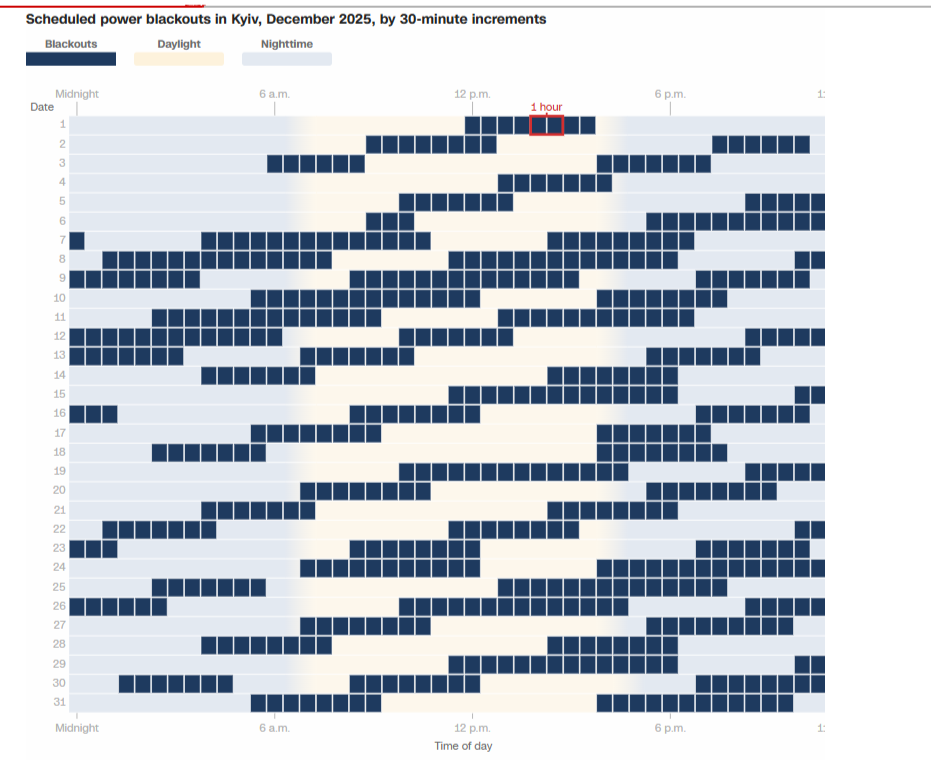
Instead, Z could have told us what he is doing to turn the lights back on.
Contrast this with Zohran Mamdani’s inaugural address as New York City mayor. Where Z traffics in percentages plucked from ether, Mamdani identifies actual causal mechanisms: “universal child care for the many by taxing the wealthiest few.” One can disagree with the policy, but the causal arrow is brutally clear—this revenue stream funds that program. When Mamdani promises to “freeze the rent” or make “buses fast and free,” he’s not invoking magical thinking. He’s proposing interventions with traceable effects.
Pearl teaches us that causes precede effects in time. So what actually ends wars? Z’s speech admits it accidentally: “Russia will have to end the war—the moment they find one reason for peace more than for fighting.” Quite. And presidential speeches don’t typically register as reasons in Moscow’s causal calculus.
Mamdani understands something Z obscures: government is an agent with power to intervene, not merely a narrator shaping public sentiment. “No longer will City Hall hesitate to use its power to improve New Yorkers’ lives,” Mamdani declares—a statement that would be meaningless if power were purely performative.
When states abandon “the function of structuring reality,” the repressed eventually returns as rage—specifically, rage at those who mistook cheerleading for leadership. Ukrainians deserve what New Yorkers are being promised: not soothing fantasies about imminent peace, but leaders who understand that optimistic speeches don’t cause victories. Actions do.