
Day 1464
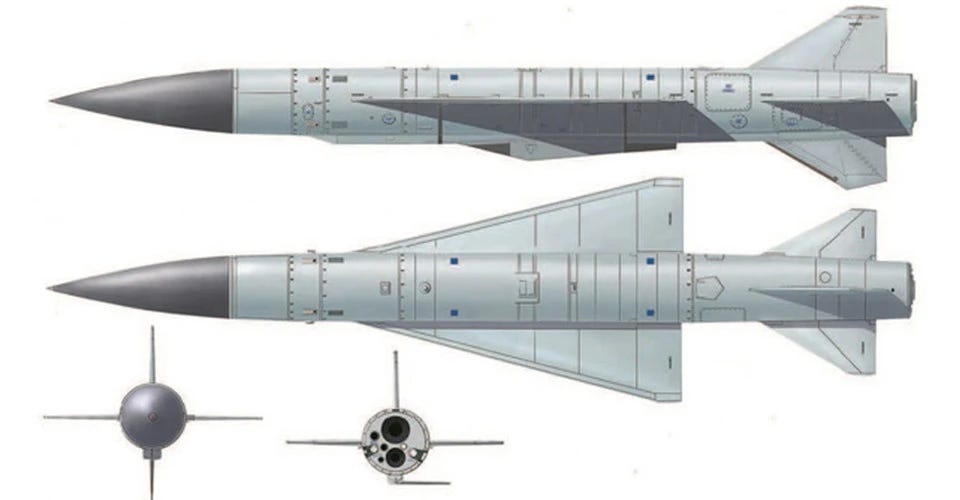
As of this writing, Russia had also launched anti-ship cruise missiles, the Kh-22 (AS-4), which are notoriously inaccurate, dropped from the bays of strategic bombers. But they did not reach Ukraine and probably fell somewhere in Russia's Bryansk region.
Hours earlier, Z chatted up Trump. Same old, same old. More bullshit.
A couple of days ago I mentioned two of the longer articles about the war — Adam Entous in The New York Times and Shaun Walker in The Guardian1. Neither thinks to mention the sequence of events without which the prelude to the mess makes no sense: the Paris summit with Putin in December 2019; the secret trip to Oman and the meeting with Patrushev in January 2020; the dismissal of the chief of staff and the installation of Yermak in February; Honcharuk ousted in March; the criminal case opened against Poroshenko in May, piggybacking on phone recordings released by Derkach, a Russian spy masquerading as a member of parliament; and then, in July, Wagnergate — the botched sting operation to capture Wagner mercenaries in Minsk, derailed at the last minute, per Bellingcat, on Yermak’s orders. That’s a pity.
Z’s vaca to Oman changed everything.
Read an article in Foreign Affairs about the war2.
Desch’s piece is a competent realist argument — Ukraine is losing, the numbers don’t lie, take the deal. But it is also a case study in what happens when you try to resolve a question of dignity with a stoplight chart.
The entire analysis operates in the register of measurable things: tank ratios, GDP, troops per mile, casualty rates. Within that register, the argument is coherent enough. But the war was never only — or even primarily — about material and rational indicators. It is about dignity. And dignity, as any Ukrainian could tell you, is not something that yields to a cost-benefit analysis.
Desch acknowledges this only to dismiss it: “the loss of the rest of Donetsk, although assuredly a blow to Ukrainian self-esteem...” — self-esteem, as if it were a psychological inconvenience rather than the animating force of the entire resistance. The Ukrainians are not fighting because they miscalculated the tank ratios. They are fighting because someone broke into their house.
There are also specific empirical weaknesses worth flagging. His casualty figures rely on Mediazona for Russian losses and UA Losses for Ukrainian ones, but he draws symmetrical conclusions that the methodologies don’t quite support. And his breezy “30 years to conquer Ukraine” reassurance to Europeans sits awkwardly alongside his simultaneous argument that Ukraine cannot hold on for another year.
But the deeper problem is this: Desch’s piece is addressed, implicitly, to Western policymakers — it is an argument for why they should pressure Kyiv to settle. It never seriously engages with the question that actually matters, which is not can Ukraine keep fighting, but what is it fighting for, and whether that is worth the price. That is a question Ukrainians themselves are increasingly, and agonizingly, debating. Desch doesn’t seem to know the debate is happening.
Ukraine Is Losing the War. With Moscow Pressing Its Advantage, Kyiv Should Trade Land for Peace (Foreign Affairs, February 26, 2026)


