

The young woman—tidy in the manner of Marie Kondo, and representing that organization in some professional capacity I didn’t entirely follow—remarked yesterday evening, over two lukewarm shots of Patrón Reposado in the kitchen, that JD Vance’s animosity toward Ukraine might trace back to his 2022 Senate campaign in Ohio. She lives in Washington, D.C., and is here on a week’s vacation; tomorrow she begins the journey back. His opponent, Tim Ryan, supported continued assistance. Vance did not. It wasn’t the central issue, but it was a live one—particularly for the American-Ukrainian community that Ohio, somewhat inconveniently for Vance, happens to contain.
Hours later, at around 2:30 a.m., Russia launched another ballistic missile attack on Kyiv and other Ukrainian cities. Several explosions. As of this writing, civilians are reported dead, dozens wounded. The usual.
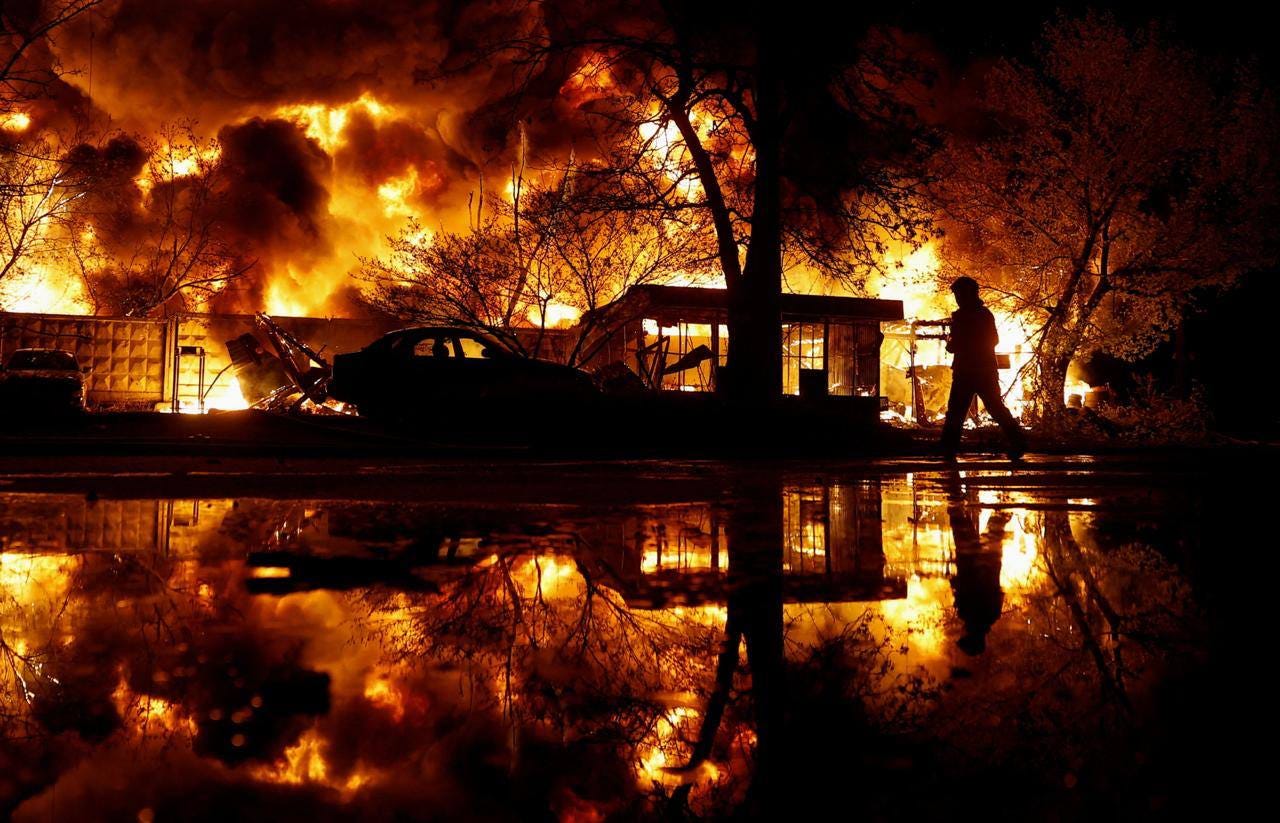
Later, on the mat, moving through a set of propulsion exercises before heading downtown, I found myself thinking about Vance and what he represents: a small, thick cloud of black smoke blocking what could have been a very nice sunrise. Exactly the image in this video—looking east from Pechersky, down Lesi Ukrainky Boulevard toward the Motherland Monument and the museum of local wars. A clear morning, interrupted.
Earlier this week, Vice President Vance sat before a scattering of students in Georgia and described ending weapons transfers to Ukraine as one of the proudest achievements of his administration. It is worth noting—gently—that the transfers had already ended months earlier. That Europe had already assumed the burden. That the war, inattentive to these pronouncements, continues into its fifth year, despite promises to end it in twenty-four hours.
This is the achievement: not doing something, and doing it loudly enough that it registers as action.
A familiar form. The man who arrives late to the harvest and takes credit for the empty field. There is a certain cleanliness to it. Nothing touches you.
From this position of careful distance, Vance has also found time to advise the pope to concern himself with matters of morality and leave politics to others. An interesting division of labor, especially from a man for whom the safest moral act is abstention—provided it is announced with sufficient conviction.
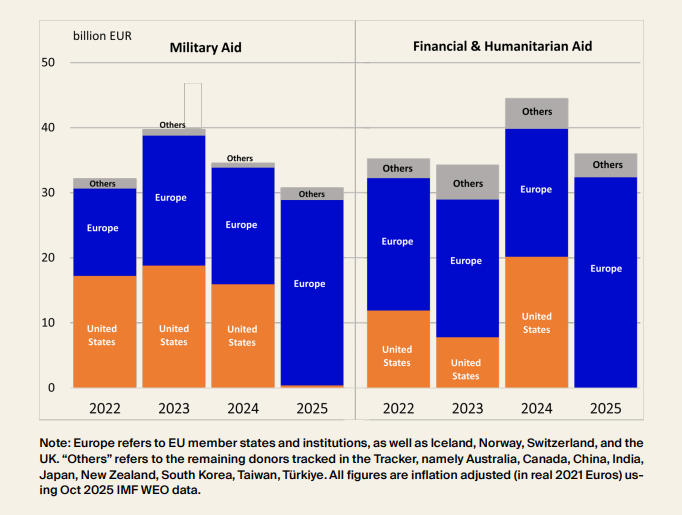
By the end of 2025, Congress had already approved more than $188 billion in Ukraine-related spending. The shipments had gone out; the consequences were already unfolding far from Georgia lecture halls. Vance now celebrates the moment he chose not to continue. It is like congratulating oneself for not boarding a train that has already left the station.
The room, on this particular evening, did not quite cooperate. Too many empty seats. Too much space for the words to travel without resistance. This is a performance that depends on proximity—the warmth of bodies, the reassurance of applause. Without it, the claim has to stand on its own.
It doesn’t.
This is not hypocrisy. Hypocrisy requires tension between what is said and what is known. This is something looser, more accommodating. When a voice from the depleted crowd shouted that he was killing children, Vance replied that conservatives should stay engaged and take the country back. He did not specify from whom.
This, too, is part of the achievement: to mansplain in a half-empty auditorium, in a country your party fully controls, and speak of liberation1.


