

Day 1630
Who is in charge?
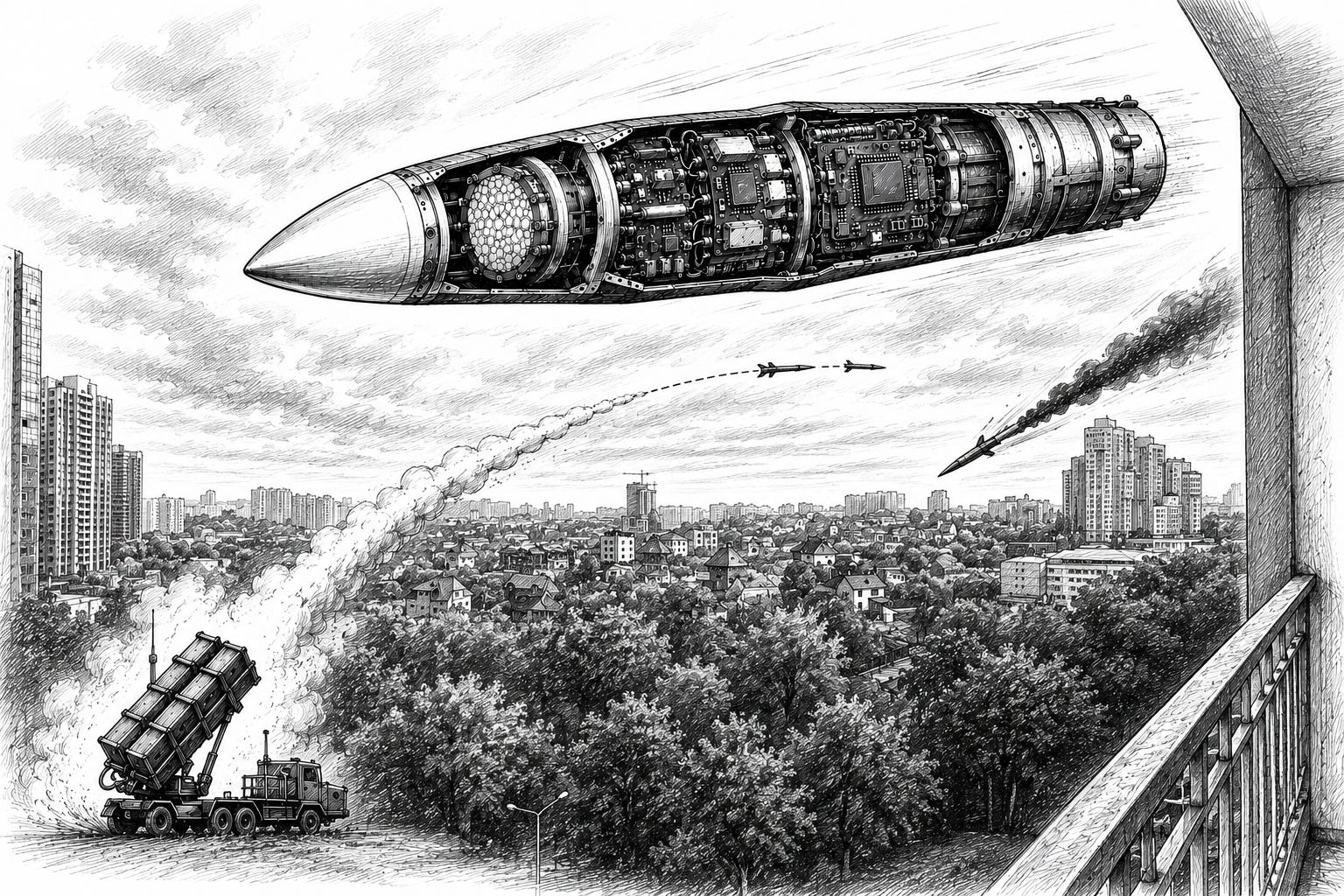
The interesting thing about four recent conversations on Ukraine is not what they say about the war. It is what they say about who is actually building the country that fights it.
Fiona Hill supplies the thesis, in passing, on a Prof G Pod episode with Anne Applebaum.1 Ukraine’s wartime innovation, she says, comes from society compensating for a state notorious for cycling through corrupt or incompetent leadership. The state doesn’t fix itself. Society routes around it. Call this what it is: not resilience, the character trait Western commentary likes to award small brave nations, but a structural fact. The state is the part of the building that keeps failing inspection. People stopped waiting for the repair.
Radek Sikorski, on The Long Game, checks how far the compensation has gone.2 He hedges properly — a draw at sea, a draw in the air, ground still contested — but the claim underneath the hedging is that Ukraine now inflicts losses faster than Russia can replace them, and that Gulf states court Ukrainian drone expertise rather than the reverse. A state that had actually organized this would be taking the credit. It didn’t, and isn’t.
Illya Sekirin explains the mechanism.3 Something near ninety-five percent of casualties and matériel losses now come from drones, which has inverted the old arithmetic of offense and defense. Soldiers hold one foxhole for fifty, a hundred days, resupplied by ground robot instead of convoy. None of it was ministry work. Hundreds of small companies and units built it faster than anyone assigned to coordinate them could keep up.
Which is the altitude of Yuriy Lutsenko, talking to Ihor Lapin the night before last.4 His story predates the invasion by three years. It’s the origin document for everything above it.
Summer 2019. Lutsenko, a few months into Z’s presidency, still prosecutor general, is summoned over the fate of Volodymyr Tsemakh — the separatist commander in custody as the one material witness willing to place a regular Russian officer at the MH17 launch site, at a moment when Europe still doubted Moscow’s direct hand in it. Moscow wants him back. Lutsenko refuses to sign off. He’s told, more or less, that his job is one phone call from someone else’s. He doesn’t preempt it by resigning. The cabinet is reshuffled at the end of August, he’s out, and within the week Tsemakh is on a plane to Russia as part of the exchange.
It’s also where he first meets the aide at Z’s shoulder — not yet head of the President’s Office, just a young man with opinions about why Ukraine doesn’t need Europe and should deal directly with Moscow. Lutsenko tells him that kind of talk put Yanukovych on a plane out of the country. The aide is Andriy Yermak.
Seven years on — five of them under full-scale invasion — Ukraine has built an entire war economy on the lesson of that room: the state will trade away its own witness for comfort with Moscow, so don’t build anything load-bearing that depends on the state behaving otherwise. Drones are what that lesson produced. They are cheap, dispersed, replaceable, and owned by nobody the state can discipline into cutting a deal.
Which is exactly what nags at me lately, watching Fire Point market Freyja. You cannot crowdsource a ballistic missile shield. The whole model that produced Ukrainian drone supremacy — thousands of small actors, no single point of failure, nothing important enough to trade away in a back room — is structurally the wrong model for interception. Interceptors need integration: shared radar, a command architecture, guidance seekers sourced from German manufacturers on their timeline, not Ukraine’s. Fire Point’s own numbers say the first successful intercept is scheduled for mid-2027, and the company has had to publicly deny, this month, that it can “close the skies” by any date sooner.5 That denial is itself worth sitting with. It means someone upstream found it useful to let people believe otherwise, for a while.
The society-compensates-for-the-state model works when the thing being built is small, distributed, and forgiving of individual failure. A drone that gets shot down is a bad Tuesday. An antiballistic missile shield that doesn’t exist yet, marketed as though it might, is a state deciding what its people are owed the truth about, and choosing comfort instead.
Anne Applebaum and Fiona Hill, on The Prof G Pod with Scott Galloway.
Radek Sikorski, with Jake Sullivan and John Finer, on The Long Game.
Illya Sekirin, with Dominik, on drone warfare.
Yuriy Lutsenko and Ihor Lapin, on Lapin from Ukraine.
On the Fire Point/Freyja timeline and messaging, see reporting flagged here, confirmed independently by RBC-Ukraine and UA.News coverage of Fire Point’s mid-2027 first-intercept target and its denial of “close the skies” claims.