

Day 1463
The Peacemakers
February 24–25, 2026
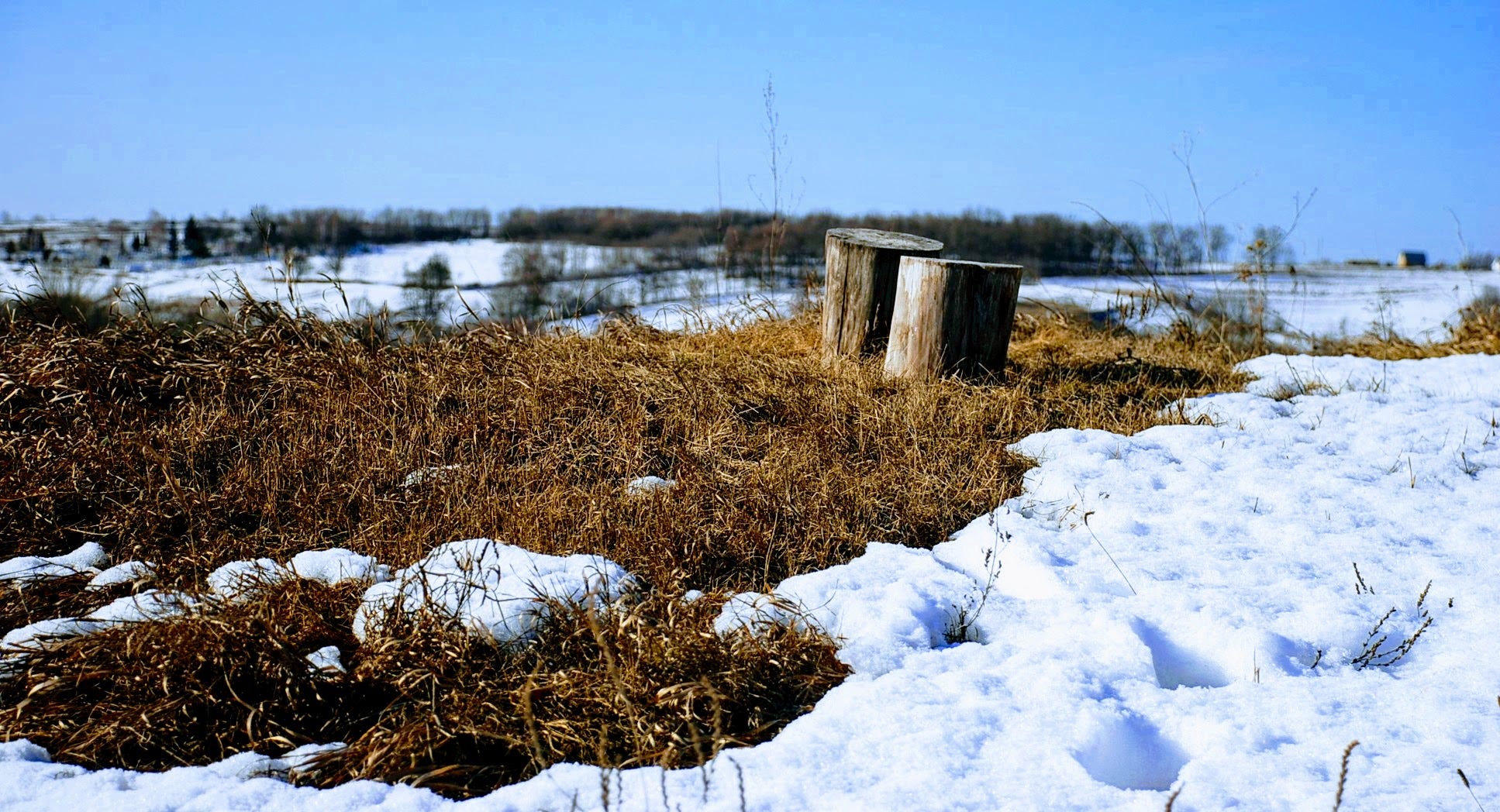
There is an old saying in Semihory — though perhaps I am inventing it just now, which is a Ukrainian tradition too — that the man who arrives after the fire to explain how he would have put it out deserves a certain kind of respect. Not admiration, you understand. A certain kind of respect.
Semihory is a small village near Bohuslav, where the ravine winds like a snake between green terraces and the millpond willows have been old for three centuries. It sits near the Ros River, in that part of the Kyiv region where the land remembers things longer than people do. The village is also where Nechui-Levytsky set his great comic novel of a family at war with itself — because the real Kaidash family prototype was known throughout the district for its nearly daily quarrels, brawls, and disorders. In the novel, the family fights for years over a pear tree on the property line. They fight until the tree withers and dies. Then they find something else to fight about1.
Hours ago, the President of the United States stood before his Congress and explained how he has ended eight wars, with Ukraine to be the ninth — the easiest one, he once said, though it has turned out to be the toughest. He has also ended eight and a quarter wars, he has said on other occasions, because Thailand and Cambodia briefly resumed fighting. A fractional war. One imagines the paperwork.
Yesterday, on this same fourth anniversary of the invasion, the President of Ukraine stood before his foreign guests in Kyiv and explained how reliably he is trying to end the bloodbath he did not prepare for.
A philosopher named Roger White has a useful thought about this. When an instrument reports on its own reliability — when the X-ray machine turns to face its own innards and announces that everything looks fine — the rational response is not to believe it, and not entirely to disbelieve it either2. It is simply to weight the report very lightly. Instruments that are truly reliable do not usually need to work so hard to seem so. Yesterday and today, on the same anniversary, we have been given two such reports from two such instruments. The attentive observer will apply the discount twice.
But let us be fair, in the way that fairness requires discomfort. Equal skepticism does not produce equal conclusions. The fact of invasion is not contested. The core of Z’s claim — we were attacked, we are being killed, we need help — have survived the discount, but just barely.
Trump’s core claim — I am bringing peace — does not survive contact with the calendar. Eight wars ended. Eight and a quarter. And the ninth, the easiest one, now in its thirteenth year.
In Semihory the Kaidash family once fought for years over a pear tree until the tree died. Then the fighting continued. The land along the Ros remembers this, the way it remembers everything — quietly, without comment, for longer than any of the parties to the dispute.
Tonight the snow is melting there.
КАЙДАШЕВА СІMA. p 4, ПОВІСТЬ ИВАНА ЛЕВІького. (1880)
Epistemic permissiveness, Roger White, Philosophical Perspectives 19 (1):445–459 (2005)